
THE
REGION
From the Adriatic shores to the Tian Shan mountains - exploring Eurasia's most strategically important regions where global powers compete for influence and opportunity
THE REGION
A vast landmass of unprecedented geopolitical importance and economic potential
Geographic Scope
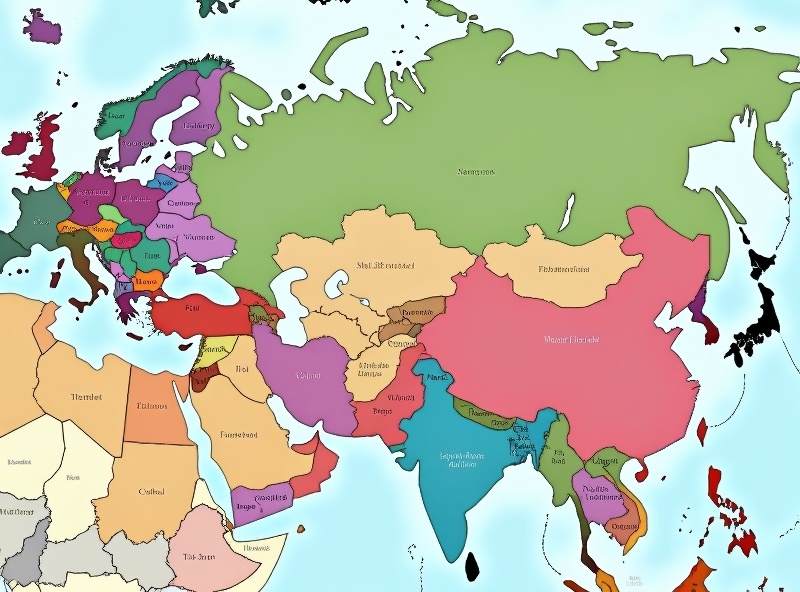
The vast region that Eurasia Analyst is covering starts on the shores of Adriatic Sea and spins all the way towards magical Tian Shan mountains. This region includes Western Balkans, Eastern Europe, South Caucasus, and Central Asia represents one of the most significant landmass for its resources, geopolitical importance stipulated by the fact that positions the countries of the region at the crossroads of major powers.
Serving as arenas for competing interests among the West, Russia, and China in terms of international politics, economic interests, global logistics as well as mineral resources and investments opportunities. Russia's invasion of Ukraine has fundamentally reshaped regional dynamics, intensifying competition and accelerating EU and NATO engagement.
Western Balkans
Complex zone with persistent instability from unresolved ethnic tensions, EU integration efforts ongoing
Eastern Europe
Direct confrontation line between democracy and authoritarianism, Ukraine and Moldova moving closer to EU
South Caucasus
Critical energy and transit corridor, power vacuum allowing increased Turkish, Iranian, Chinese and Western influence
Central Asia
Crucial hub for great-power rivalry, multi-vector foreign policies balancing competing interests
Geopolitical Dynamics
Understanding the complex interplay of regional powers and emerging challenges
Western Balkans
The Western Balkans remain a complex zone with persistent instability from unresolved ethnic tensions, particularly between Serbia and Kosovo as well as in Bosnia and Herzegovina. External actors like Russia and China exploit enlargement fatigue to increase influence, using disinformation and investment.
To counter this, the EU has intensified its engagement with integration efforts like the Growth Plan, though progress is stalled in some areas.
Eastern Europe
In Eastern Europe, the war in Ukraine has transformed the region into a direct confrontation line between democracy and authoritarianism, pushing countries like Ukraine and Moldova closer to the EU. The conflict has spilled over, leading to airspace violations in Poland and Romania and heightening regional security fears.
Russia's influence remains a key factor, though its resources are strained.
South Caucasus
The South Caucasus serves as a critical energy and transit corridor connecting Europe and Asia, central to initiatives like the Middle Corridor. Russia's reduced capacity has created a power vacuum, allowing increased Turkish, Iranian, Chinese and Western influence.
The region faces ongoing instability from unresolved conflicts, with Russia losing influence in Armenia while possibly consolidating it in Georgia.
Central Asia
Central Asia is a crucial hub for great-power rivalry, where states pursue "multi-vector" foreign policies to balance competing interests. China is increasing its economic dominance via the Belt and Road Initiative, while Russia's traditional security influence wanes but persists.
Concerns over stability from Afghanistan, terrorism, and climate change further complicate the region's geopolitical landscape.
Economic Significance
A region of vast economic potential and strategic investment opportunities
Regional Economic Overview
Similarly, this vast region is economically significant and thus attractive. From manufacturing hubs to energy corridors, from tech innovation centers to agricultural powerhouses, the region offers unparalleled opportunities for growth and investment.
Western Balkans Economy
The Western Balkans benefit from foreign direct investment (FDI) as EU companies relocate production closer to home for better supply chain resilience. The Western Balkans countries are engaged in an EU-driven economic development process, with significant EU funding and investment aimed at integrating them into the single market.
Manufacturing Hub
EU companies relocating production
EU Integration
Single market integration process
Eastern Europe Innovation
Eastern Europe with its well-educated and tech-savvy workforce is become a center for manufacturing, IT, and innovation, attracting substantial FDI. EU membership perspective can become a driving force for countries like Moldova and Ukraine for rapid economic growth and income convergence.
Formerly lower-middle-income countries transforming into high-income economies within relatively short period.
IT Innovation
Tech-savvy workforce
Rapid Growth
Income convergence potential
South Caucasus Energy & Trade
South Caucasus region is a vital transit route for Caspian Sea oil and gas, primarily from Azerbaijan, supplying Europe through pipelines like the Southern Gas Corridor. Located between major markets, the South Caucasus is a key node for the Middle Corridor, a crucial trade route connecting Europe, Central Asia, and Asia.
Liberalized economy in Georgia, with free trade agreements signed with EU and China, Armenia's western pivot, as well as Azerbaijan's oil and gas resources makes South Caucasus FDI attractive.
Energy Transit
Oil & Gas Corridors
Trade Routes
Middle Corridor
Free Trade
EU & China Agreements
Central Asia Resources
Countries of Central Asia region possess vast reserves of oil, gas, and crucial minerals, significant industrial potential coupled with well developed agricultural production makes it a critical source for global markets. This region represents rich, yet not duly economically explored area with unparalleled opportunities.
Located on the intersection of Eurasian landmass Central Asia serves as a strategic crossroads for Eurasian trade, with investments in transport and infrastructure expanding its role in logistics connecting Europe and Asia.
Natural Resources
Oil, gas, crucial minerals
Trade Crossroads
Europe-Asia logistics hub
Investment Opportunities
Manufacturing
Supply chain resilience and cost efficiency
Energy
Critical transit corridors and resources
Technology
Innovation hubs and skilled workforce
Logistics
Strategic crossroads for global trade