
BRIDGING GEOPOLITICS, GOVERNANCE, AND RISK INTELLIGENCE FOR THE MARKETS IN SOME OF THE WORLD'S MOST COMPLEX REGIONS
MISSION STATEMENT
EURASIA ANALYST empowers global investors, corporations, and policymakers with unparalleled clarity on the complex interplay of political developments, market dynamics, and internal country and regional trends in the Western Balkans, Eastern Europe, South Caucasus and Central Asia.
BESPOKE PRODUCTS
Bespoke research, analysis, and advisory, created specifically for an individual client's unique needs
WHAT WE DO
TAILORED SERVICES
Bespoke research, analysis, and advisory, created specifically for an individual client's unique needs.
COUNTRY PROFILES
Country profiling, including outlook, insights and analysis covering political, economic, business, and risk environment.
POLITICAL RISK ADVISORY
Political risk advisory provides strategic counsel through analyzing geopolitical insights, evaluating threats and opportunities existing in the markets for informed decision-making.
TAILORED SERVICES
Bespoke research, analysis, and advisory, created specifically for an individual client's unique needs.
GEOPOLITICAL INSIGHTS
Expert analysis and strategic intelligence on Eurasian geopolitical developments, security trends, and regional dynamics.

The Black Sea Interconnector: A New Energy Silk Road
The Black Sea Submarine Cable, or the Green Energy Corridor, is a flagship infrastructure venture creating a physical energy and data exchange bridge between the South Caucasus and the European Union. This undersea high-voltage direct current (HVDC) system will span roughly 1,155 - 1,195 kilometers, connecting Anaklia, Georgia, with Constanța, Romania.
The TRIPP to Peace: American Pivot in the Caucasus
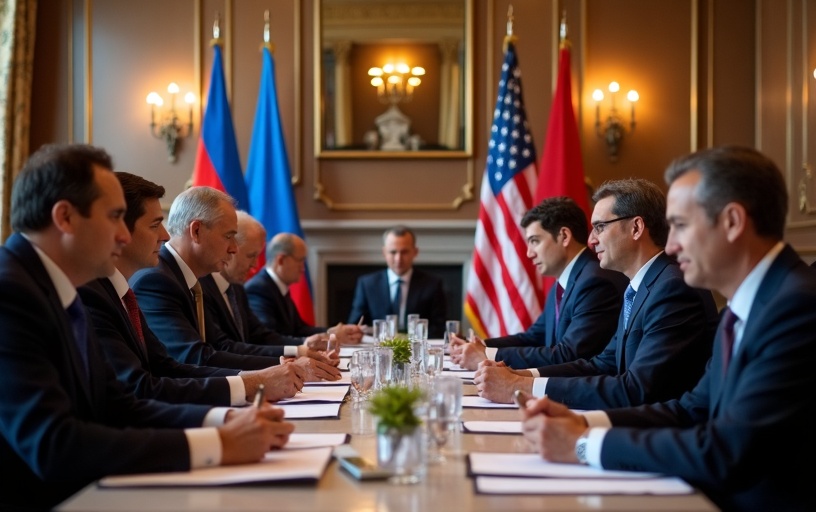
Vice President JD Vance's landmark mission to the South Caucasus in February 2026 marked a decisive shift in projecting American foreign policy, signaling a transition from decades of cautious observation to active, high-stakes brokerage. Against the backdrop of waning Russian hegemony, Vance's presence in Yerevan and Baku served as the ultimate reinforcement of the 2025 Washington peace framework.
Kyrgyzstan: Reshuffle Resembles Revolution Within Elite
The dismissal of Kamchybek Tashiev on February 10, 2026, represents a decisive structural shift in Kyrgyzstani governance, terminating the dual-leadership model that has defined the country's political landscape since 2020. This move by President Sadyr Japarov functions as a preemptive consolidation of power, designed to dismantle the State Committee for National Security (GKNB) as a competing center of authority.
Central Asia: Foreign Investment Surge 2020-2025
The Central Asian landscape has undergone a profound economic metamorphosis between 2020 and 2025, evolving into a global "growth pole" that defies broader international trends. While global investment flows faced significant contraction in 2024, this five-nation bloc saw its mutual direct investment stock climb to a record $48.4 billion by mid-2025.
Current Crisis in Albania Explained
Albania is currently navigating a period of profound instability, as the nation finds itself caught between its aspirations for European integration and a systemic breakdown of political and social order.

New Transit Routes - New Competitive Reality in the South Caucasus
The strategic landscape of the South Caucasus is undergoing a profound transformation as Georgia's role being the primary transit artery for the Middle Corridor (TITR) faces the emergence of the Trump Route for International Peace and Prosperity (TRIPP).
Kazakhstan's Win in Karachaganak Arbitration Case Signaled the End of Passive Oversight in Oil and Gas Industry
On January 26, 2026, a major shift in the global energy landscape occurred, as an international arbitration panel ruled that the multinational consortium managing the Karachaganak gas and condensate field must pay billions in compensation to Kazakhstan.
United States Brokers Peace Deal Between Armenia and Azerbaijan
Armenia and Azerbaijan have made considerable progress toward a lasting peace settlement, initialing a foundational agreement that could redefine the South Caucasus region. A formal treaty, however, has not yet been signed.
European Union Activates Its Engagement With Central Asia
The European Union has significantly deepened its engagement with the Central Asian republics, elevating the relationship to a strategic partnership. This comprehensive approach addresses mutual interests spanning economic cooperation, critical resource security, and regional stability.
Georgia Political Crisis Explained
Georgia is currently embroiled in a profound political crisis, a struggle between its predominantly pro-Western population and the government that appears to be drifting away from Euro-Atlantic integration.
Parliamentary Reform in Kazakhstan
Kazakhstan is currently engineering a significant political transformation of its legislative framework. The ongoing reform initiative, spearheaded by President Kassym-Jomart Tokayev, centers on a potential shift to a unicameral parliamentary system, building upon prior adjustments designed to enhance the legislature's role.
Middle Corridor: Overview, Analysis of Current Status, Problems, Perspectives and Potential
The current status of the Middle Corridor is characterized by rapid development and a notable surge in utilization. Since 2022, cargo volumes have increased dramatically, with substantial year-over-year increases in freight traffic, highlighting its growing appeal to international logistics operators and shippers.
Impact of EU and US Sanctions Against Russia on Countries of South Caucasus, Central Asia and Western Balkans
The latest US sanctions against Rosneft and Lukoil coupled with the European Union's nineteenth sanctions package are intensifying economic and regulatory pressure on the countries of South Caucasus, Central Asia, and the Western Balkans. These measures pose significant risks of secondary sanctions, directly target the regional financial institutions facilitating evasion, and disrupt critical energy and trade logistics.